International Day of Zero Waste 2026 places the focus on food waste and practical waste prevention. This page brings together the official theme, NEMC public information for Dar es Salaam, the 7Rs, circular economy basics, and what the message means for households and neighbourhoods across Mbezi Beach A.
JMMBA is sharing this awareness notice to help residents of Mbezi Beach A follow and support national environmental education efforts around International Day of Zero Waste 2026.
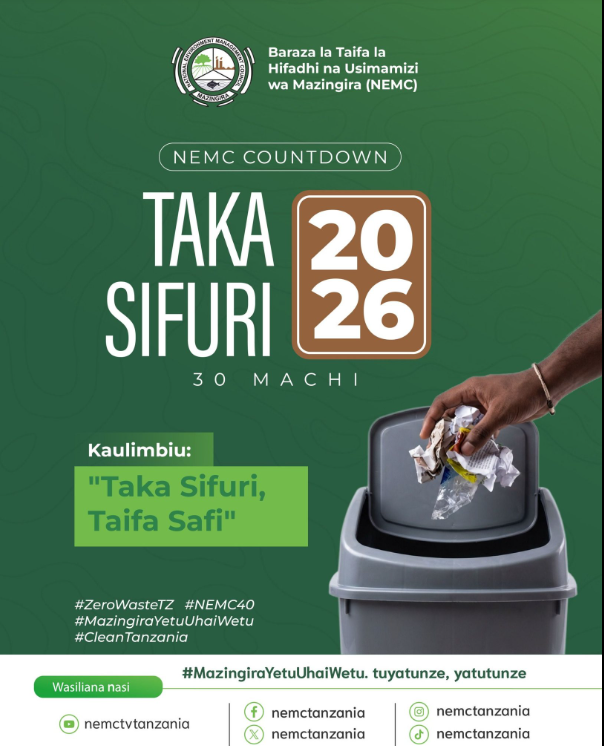
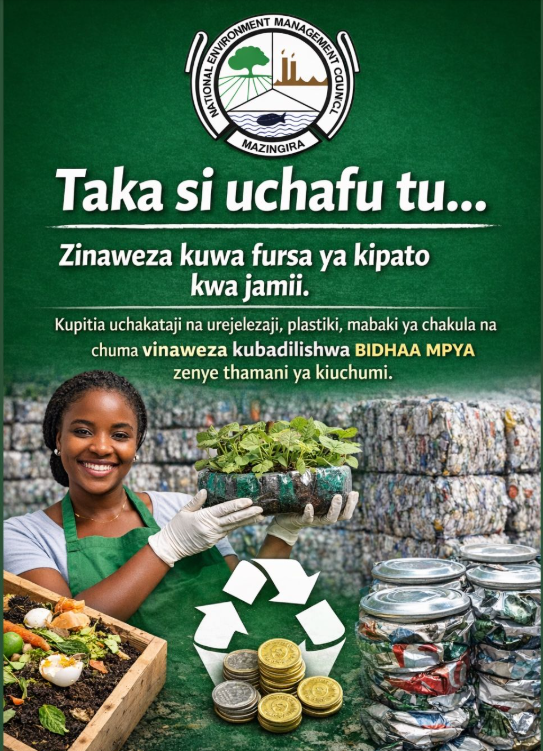
The National Environment Management Council, working with the Dar es Salaam Regional Commissioner’s Office and other environmental stakeholders, is expected to hold a public education and exhibition programme at Mnazi Mmoja from 28 to 30 March 2026. The programme focuses on showing how waste can be transformed into raw materials and other useful products, while promoting the idea that waste can be an opportunity rather than only a problem.

A public awareness visual supporting the 30 March Zero Waste message and clean environment campaign.

This message aligns strongly with circular economy thinking by showing how waste can become new products, income, and community value.

JMMBA can help share this message locally through clear public information for residents of Mbezi Beach A.
Residents who are able to attend the Dar es Salaam event can use it as a learning opportunity on waste separation, recycling, composting, upcycling, and small-scale income opportunities linked to waste recovery. For those who do not attend, the same message still applies at household and neighbourhood level through everyday choices about food, packaging, waste separation, reuse, and disposal.
Not every member lives near the shoreline, and this page is not treating zero waste as only a beach issue. The point is wider: food waste and household waste habits begin inland, in homes, plots, streets, food businesses, schools, and drains across Mbezi Beach A.
Shopping, storage, portioning, leftovers, separation, reuse, and disposal choices are made at household level long before waste becomes a public problem.
Waste dropped inland does not necessarily stay inland. Streets, drains, open spaces, and runoff can move it across the area and toward lower end points.
The shoreline remains important because it makes accumulated waste visible, but the broader issue starts much earlier across the whole of Mbezi Beach A.
These full-colour icons make the 7Rs easier to scan, teach, and reuse in JMMBA website sections, WhatsApp flyers, posters, and awareness blocks across Mbezi Beach.
The 7Rs are practical habits that help households and communities reduce waste at the source. They are not theory. They are daily decisions that shape the kind of environment we create for ourselves.
Step back and think about the kind of consumer you want to be. Ask whether a purchase is really needed, what waste it will create, and whether there is a cleaner option with less harm to the environment.
Refusing waste begins before buying. Avoid unnecessary single-use items, excess packaging, and products that will quickly become trash. The best waste is the waste that is never created.
Buy less, choose durable goods, avoid heavily packaged items, borrow when possible, and compost organic waste. Items you no longer need can be donated, shared, or sold instead of discarded.
Before throwing something away, ask how else it can be used. Glass jars can store dry goods, containers can be repurposed, and many household items can serve again in practical ways.
We do not need to live as a throwaway society. Clothes, furniture, electronics, tools, and household items can often be repaired and kept in use longer, saving money and reducing pressure on landfills and resources.
Some new and unused items are better appreciated by someone else. Regifting responsibly keeps good products in circulation and prevents unnecessary new consumption, as long as the item is suitable and in proper condition.
Recycling and composting help materials re-enter the value chain instead of becoming pollution. Plastics, glass, paper, metals, and organic waste should be separated where possible so they can be properly processed and used again.
Zero waste starts in kitchens, markets, schools, events, and homes before it appears in streets, drains, or at the shoreline.
A circular economy is an approach that keeps materials in use for as long as possible, reduces waste at the source, and designs systems so that products, packaging, and organic materials do not end up as pollution. Instead of the old take, use, and throw away model, a circular economy aims to reduce, reuse, repair, recover, recycle, and compost so that value stays in the community and pressure on nature is reduced.
In a linear economy, materials are taken, turned into products, used briefly, and then discarded. In a circular economy, we ask a different question: how can this item stay useful longer, be shared, repaired, reused, refilled, composted, or recycled instead of becoming waste?
That is why the 7Rs matter. They are practical, everyday actions that help turn a circular economy from an abstract idea into daily behaviour at household and community level.
A circular economy is not only about managing waste better. It is about creating less waste in the first place.
This video is linked instead of embedded because some browsers, networks, or privacy settings block external Vimeo players inside websites.
Open Video in New TabThis short video is a useful introduction to the wider idea behind zero waste. It helps explain why reducing waste is not just about bins and clean-ups, but about rethinking how materials move through homes, businesses, and communities.
External link: Vimeo
Shoreline clean-up addresses the visible build-up of waste at an end point where different pathways meet and where the environmental impact becomes hard to ignore.
Zero waste addresses causes earlier in the chain: food waste, purchasing habits, packaging, separation, reuse, composting, storage, and disposal behaviour in everyday life.
For Mbezi Beach A residents, the value of Zero Waste Day is not in adding another slogan. It is in understanding the official message properly and applying it to daily life through better food management, lower waste generation, cleaner habits, and more careful handling of what we discard.
That is why this page focuses on explanation rather than hype. The subject begins in ordinary household decisions and extends outward into neighbourhood cleanliness, drainage, public spaces, and the wider environment.
JMMBA Community and Environment Hub | Mbezi Beach A | Public information, practical awareness, and community environmental responsibility.